

Gas Inlet Tube: Function and Importance in Chemistry Labs

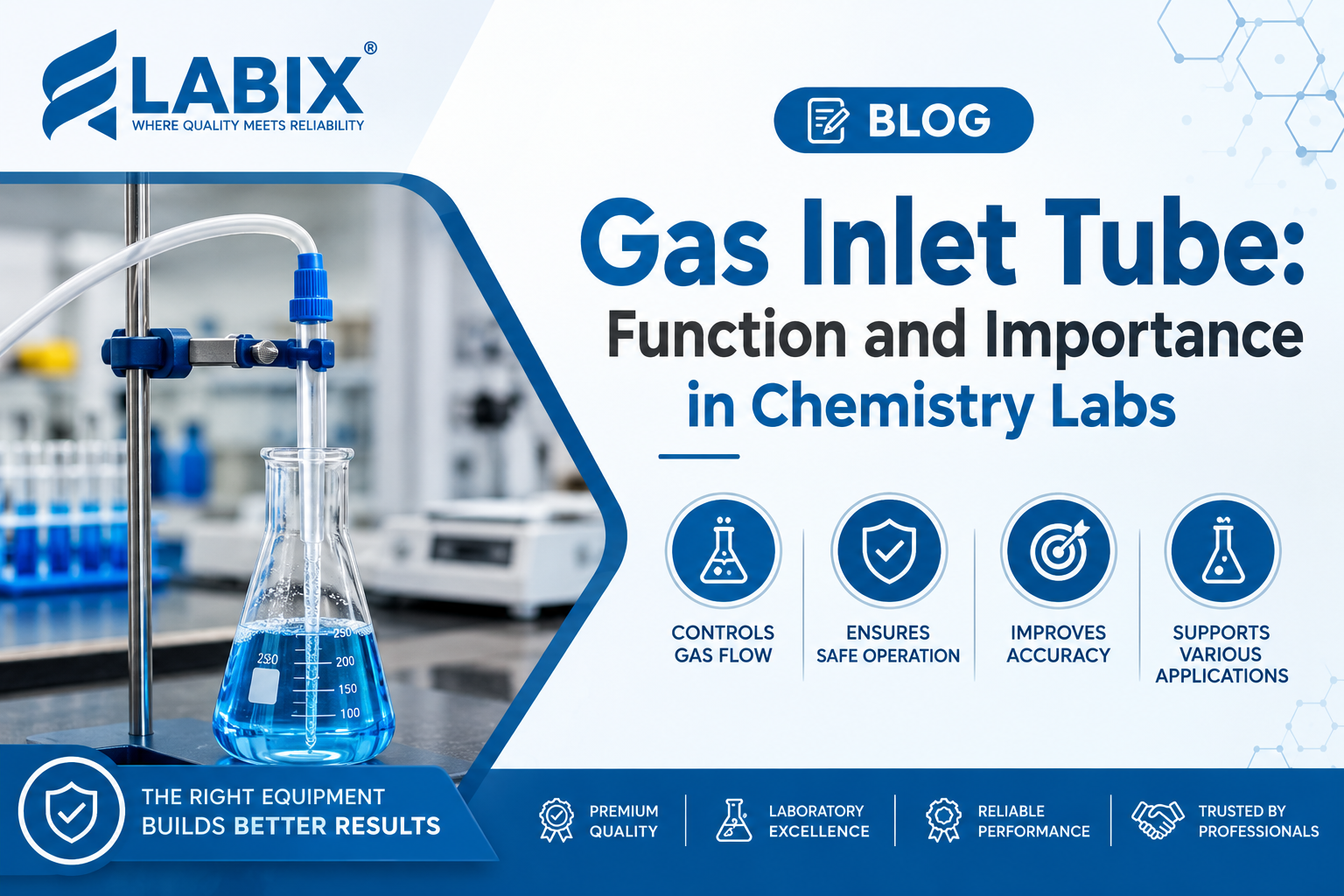
A gas inlet tube is a laboratory component used to introduce gas into a chemical reaction vessel or other experimental apparatus. It helps direct gas from a suitable supply source to the required location within a laboratory setup. The function of a gas inlet tube depends on its design, connection type, and intended application. In chemistry laboratories, it may be used in gas introduction experiments, research procedures, and educational demonstrations. Understanding its construction, material compatibility, dimensions, and safe operating conditions is important when selecting the right component. This guide explains how a gas inlet tube works, its common applications, and the factors laboratories should consider before purchasing one.
What Is a Gas Inlet Tube?
A gas inlet tube is a tube designed to carry gas into laboratory apparatus. It can form part of an experimental arrangement involving a reaction flask, a gas supply, or other compatible laboratory equipment.
Gas inlet tubes are available in different designs and dimensions to suit particular apparatus configurations. Depending on the design, a tube may connect through a ground-glass joint or another suitable connection. Some arrangements direct gas into the headspace of a vessel, while others allow gas to enter below the liquid surface when the experiment requires gas–liquid contact.
The correct design depends on the intended experiment, the equipment being used, and the properties of the gas involved. A tube should not be selected solely by its name or appearance. Its dimensions, joint compatibility, material, and operating limitations must match the requirements of the complete setup.
Basic Structure and Design of a Gas Inlet Tube
A gas inlet tube typically has a passage through which gas can flow and connection features suited to the apparatus. Some laboratory glass versions use ground-glass joints to connect with compatible glassware.
The tube’s length, diameter, shape, and joint size can vary. These characteristics affect how it fits into the apparatus and where the gas enters the vessel.
Before use, laboratory personnel should check the product drawing and specifications to confirm that the tube fits the intended setup.
How Does a Gas Inlet Tube Work?
A gas inlet tube provides a pathway for gas to move from a suitable source into a laboratory apparatus. The gas flow is determined by the overall system, including the supply, regulators, valves, tubing, pressure conditions, and any flow-control equipment.
In some experiments, gas enters the vessel above the liquid. In others, the inlet extends below the liquid surface to facilitate contact between the gas and liquid.
The tube itself does not necessarily control the gas flow or regulate pressure. Those functions require suitable components designed for the application.
What Is the Function of a Gas Inlet Tube in a Chemistry Laboratory?
The primary function of a gas inlet tube is to introduce gas into a laboratory apparatus in a controlled and appropriate arrangement. Its specific role depends on the chemical process and equipment design.
Introducing Gas into a Reaction Setup
Some chemical reactions require a gaseous substance as a reactant or need a particular gas environment. A suitable gas inlet tube can provide a pathway for introducing that gas into the reaction vessel.
For example, a laboratory procedure may require a gas to enter a reaction flask while the contents are mixed or maintained under specified conditions. The inlet arrangement must be compatible with the gas, the reaction vessel, and the experimental procedure.
Researchers should also consider how the gas leaves the apparatus, whether pressure can build up, and whether additional controls are needed.
Supporting Gas–Liquid Contact
Certain laboratory procedures require gas to come into contact with a liquid. Depending on the apparatus design, a gas inlet tube may direct gas below the liquid surface to support this interaction.
The extent of gas–liquid contact depends on factors such as the tube arrangement, gas flow, liquid properties, and the geometry of the vessel. A simple gas inlet tube should not automatically be treated as a gas-dispersion device because not all designs produce bubbles or distribute gas in the same way.
The correct apparatus should be selected according to the experiment’s requirements.
Connecting Components in a Laboratory Apparatus
Gas inlet tubes can connect a gas source to compatible laboratory glassware or other apparatus. A correctly matched joint helps the components fit together as intended.
Compatibility is important because a poorly matched connection may leak, become unstable, or damage glassware. Appropriate seals, connectors, and flow-control components may also be needed.
A gas inlet tube is one part of the complete experimental system, so its suitability should always be evaluated alongside the other components.
Common Applications of Gas Inlet Tubes in Chemistry Labs
Gas inlet tubes may be used in several types of laboratory work. Their suitability depends on the gas, experimental conditions, apparatus design, and safety requirements.
Gas Introduction During Chemical Reactions
In suitable reaction setups, a gas inlet tube can deliver a gaseous reactant to the reaction vessel. The arrangement may be used when a procedure requires gas to enter the vessel during a reaction.
The tube’s material and connection must be compatible with the chemicals and operating conditions. Researchers should follow the documented experimental method rather than assuming that one tube design is suitable for every reaction.
Laboratory Research and Experimental Setups
Research laboratories use different gas-handling arrangements depending on the purpose of an experiment. A gas inlet tube may form part of an apparatus designed for gas introduction, reaction studies, or other procedures requiring a gas pathway.
The selection process should consider the vessel design, connection type, gas properties, and any pressure or temperature limitations. Where a procedure requires specialized gas delivery, a purpose-designed component may be more suitable than a general-purpose inlet tube.
Educational and Demonstration Laboratories
In educational laboratories, gas inlet tubes may be included in chemistry apparatus used for supervised practical experiments and demonstrations.
Teachers and laboratory technicians should verify the equipment setup before use and explain the relevant precautions to students. The gas must be suitable for the experiment, and the apparatus should include appropriate ventilation, monitoring, and other controls where required.
Hazardous gases should only be handled by trained personnel using suitable facilities and approved procedures.
Materials and Design Features of Gas Inlet Tubes
Material and design influence whether a gas inlet tube is appropriate for a particular laboratory application. The product’s technical specifications should be reviewed before it is used or purchased.
Why Is Laboratory Glass Used?
Glass is commonly used in laboratory apparatus because it allows visual inspection and can be suitable for many chemical applications. Borosilicate glass is used in laboratory glassware because it offers useful chemical resistance and resistance to temperature changes compared with many ordinary glass types.
However, glass is not universally resistant to every chemical, temperature, or operating condition. Compatibility depends on the glass composition, the substance involved, exposure conditions, and the manufacturer’s specifications.
Laboratory personnel should confirm that the selected material is suitable for the intended use.
Joint Sizes, Dimensions, and Connection Types
Some gas inlet tubes use ground-glass joints to connect with compatible laboratory apparatus. Joint sizes must match the receiving component.
Other important details include tube length, diameter, shape, and the position of the inlet within the vessel. These factors determine whether the tube fits the setup and directs gas to the intended location.
For example, LABIX Labware lists an Air Leak Tube/Gas Inlet Tube, Model LBX-1257, with listed cone options B 14, B 19, B 24, and B 34. Buyers should check the product listing and verify the required joint size before ordering.
Design Considerations for Gas Flow
Gas flow depends on the complete delivery system rather than the tube alone. Tube dimensions, connection arrangements, valves, regulators, supply pressure, and downstream resistance may all affect performance.
The product’s intended operating conditions should be checked before it is connected to a gas supply. Do not assume that a glass tube can withstand pressurized operation simply because it is made from laboratory glass.
How to Select the Right Gas Inlet Tube
Selecting a suitable gas inlet tube begins with understanding the apparatus and the experimental requirements. Product names alone are not enough to establish compatibility.
Check Apparatus and Joint Compatibility
Identify the vessel or apparatus into which the gas will be introduced. Confirm the joint standard, dimensions, and connection type required.
Compare these requirements with the manufacturer’s product drawing and specifications. Ground-glass joints should fit their intended counterparts correctly; mismatched components should not be forced together.
If the existing apparatus has an unclear joint size, obtain measurements or technical guidance before purchasing.
Consider Chemical and Temperature Compatibility
Identify the gas, chemicals, temperature conditions, and other exposures expected during the experiment. Consult the manufacturer documentation to determine whether the tube material is suitable.
Also consider whether the setup involves pressure changes, heating, or other conditions that could affect the apparatus. A product suitable for one experiment may not be appropriate for another.
Review Product Specifications Before Purchasing
Before placing an order, check:
- Product dimensions and joint size
- Material and intended application
- Compatibility with the existing apparatus
- Manufacturer guidance on operating conditions
- Quantity required and product identification
For bulk purchases, verify the specifications and quantities before confirming the order. If important details are missing, request clarification from the supplier.
Safe Handling, Setup, and Maintenance
Correct handling helps reduce the risk of breakage, leaks, and equipment damage. Safe operation also depends on the gas being used and the design of the complete apparatus.
Inspect the Tube and Connections Before Use
Check the tube for cracks, chips, or other visible damage. Examine the joints and connectors for cleanliness and compatibility. Damaged glassware should be removed from use rather than repaired through improvised methods.
Do not force a tube into a mismatched joint, and ensure the apparatus is assembled according to the manufacturer’s instructions.
Follow Appropriate Gas-Handling Procedures
Use suitable regulators, flow-control equipment, and pressure-protection measures where required. Ensure that ventilation, gas detection, containment, and emergency arrangements are appropriate for the gas and experiment.
Never assume a gas inlet tube is rated for pressurized service unless the manufacturer explicitly specifies this. Avoid arrangements that can unintentionally trap gas and create a pressure hazard. Follow institutional safety procedures and applicable regulations.
Clean and Store the Tube Correctly
Follow the manufacturer’s cleaning recommendations and confirm that cleaning agents are compatible with the material. Handle glass components carefully during washing and drying.
Store the tube in a secure location where it will not be struck by other equipment. Before reusing it, inspect it again for damage and contamination.
Gas Inlet Tube vs Other Laboratory Tubes
Laboratory tubes can look similar but serve different purposes. Selecting the correct component requires checking its design and intended application.
Gas Inlet Tube vs Gas Delivery Tube
The terms gas inlet tube and gas delivery tube may overlap in general laboratory usage. Both can describe components that carry gas within an apparatus, but the exact meaning depends on the equipment design and the manufacturer’s terminology.
Check the product drawing, connection type, and intended use instead of assuming that every product sold under either name is interchangeable.
Gas Inlet Tube vs Gas Collection Tube
A gas inlet tube is generally used to introduce gas into an apparatus. A gas collection tube or collection apparatus serves a different purpose: collecting or handling gas according to its specific design.
For example, LABIX offers gas collecting tubes with two three-way double oblique bores. This is a separate product listing, and its intended function and connection requirements should be checked before selecting it for an experiment.
Frequently Asked Questions About Gas Inlet Tubes
What Is the Main Function of a Gas Inlet Tube?
The main function of a gas inlet tube is to introduce gas into a laboratory apparatus or reaction vessel. Its exact role depends on the tube design, gas properties, and experimental requirements.
Where Is a Gas Inlet Tube Used in Chemistry Laboratories?
Gas inlet tubes may be used in suitable reaction setups, laboratory research, and supervised educational demonstrations where a gas needs to enter an apparatus. The tube must be compatible with the experiment and the equipment.
Which Material Is Commonly Used for Laboratory Gas Inlet Tubes?
Glass, including suitable borosilicate glass, is used in many laboratory glassware applications. Material selection depends on the gas, chemical exposure, temperature, and operating conditions. Always check the product specifications.
How Do I Choose the Correct Gas Inlet Tube Size?
Check the required joint size, tube dimensions, connection type, and apparatus design. Compare these details with the manufacturer’s specifications before purchasing to ensure compatibility.
Is a Gas Inlet Tube Suitable for Pressurized Gases?
Not necessarily. Suitability depends on the design and documented pressure rating of the tube and the complete apparatus. Verify the manufacturer’s operating limits and use appropriate pressure controls and safety procedures.
Conclusion: Choosing a Suitable Gas Inlet Tube for Laboratory Use
A gas inlet tube helps introduce gas into suitable laboratory apparatus and can support a range of chemistry experiments. Choosing the correct component requires attention to joint compatibility, dimensions, material suitability, experimental conditions, and safe gas handling. Laboratories should review technical specifications rather than relying only on product names or appearance. LABIX Labware offers an Air Leak Tube/Gas Inlet Tube among its laboratory glassware products. Review the LABIX gas inlet tube product page to check the listed options and confirm whether the product matches your apparatus requirements before purchasing.