

| Cat. No. | Effective Length mm | Disc Dia. mm |
| 1424/1 | 150 | 10 |
| 1424/2 | 300 | 10 |
| 1424/3 | 300 | 20 |
| 1424/4 | 450 | 20 |
| 1424/5 | 450 | 30 |
| 1424/6 | 600 | 30 |
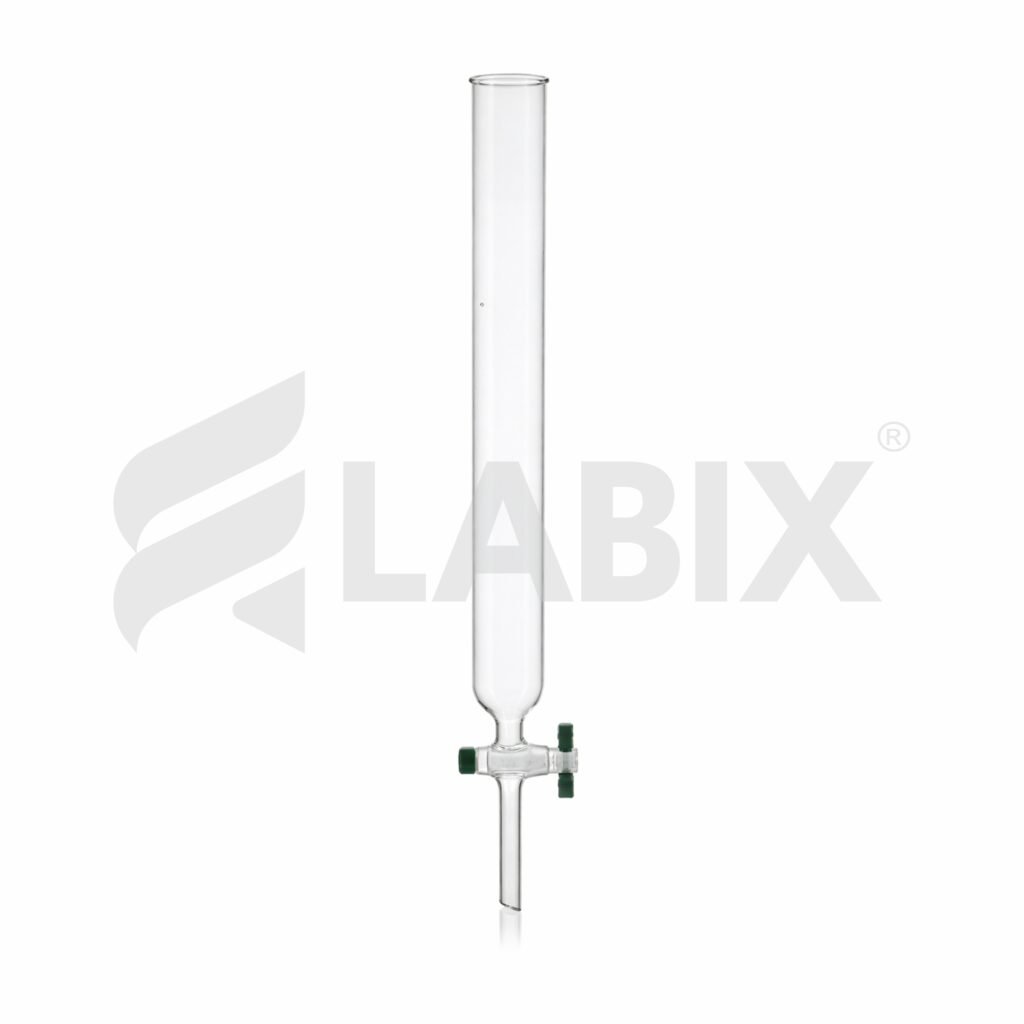
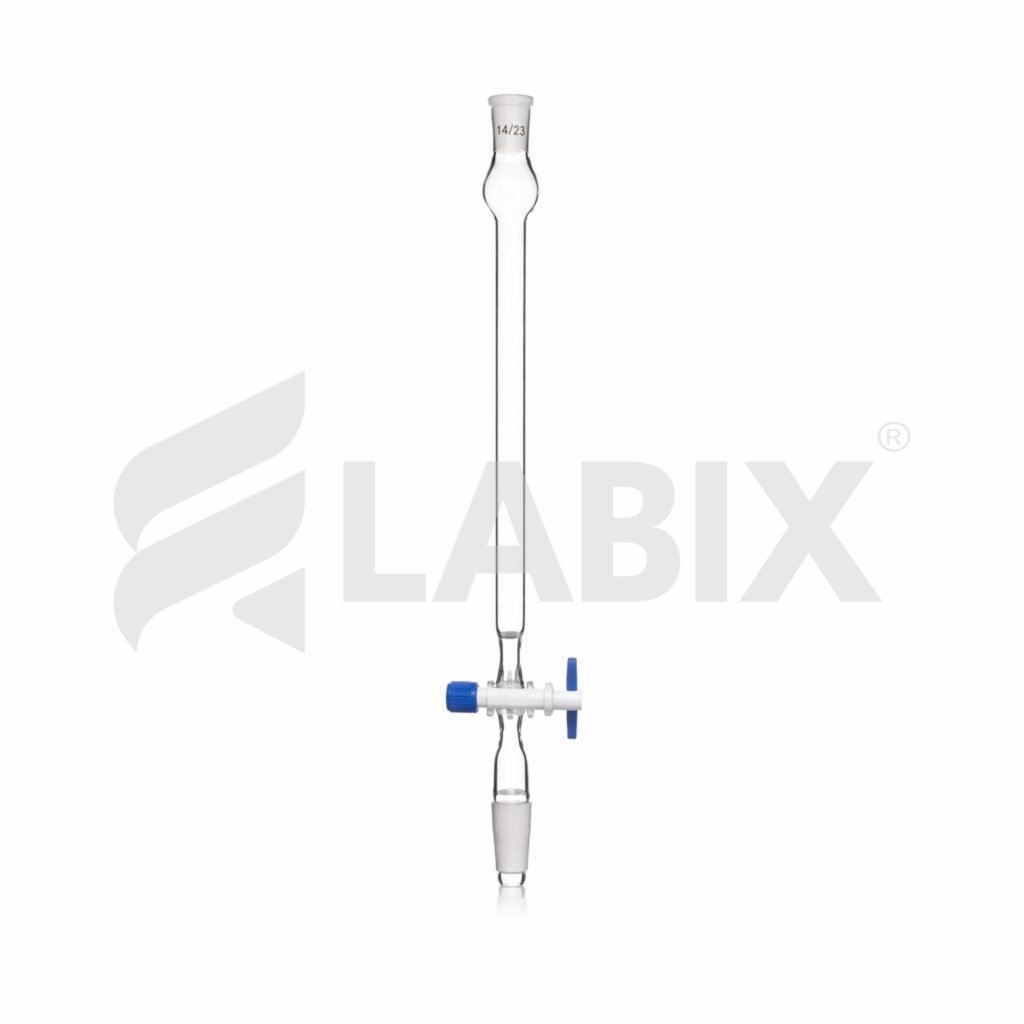
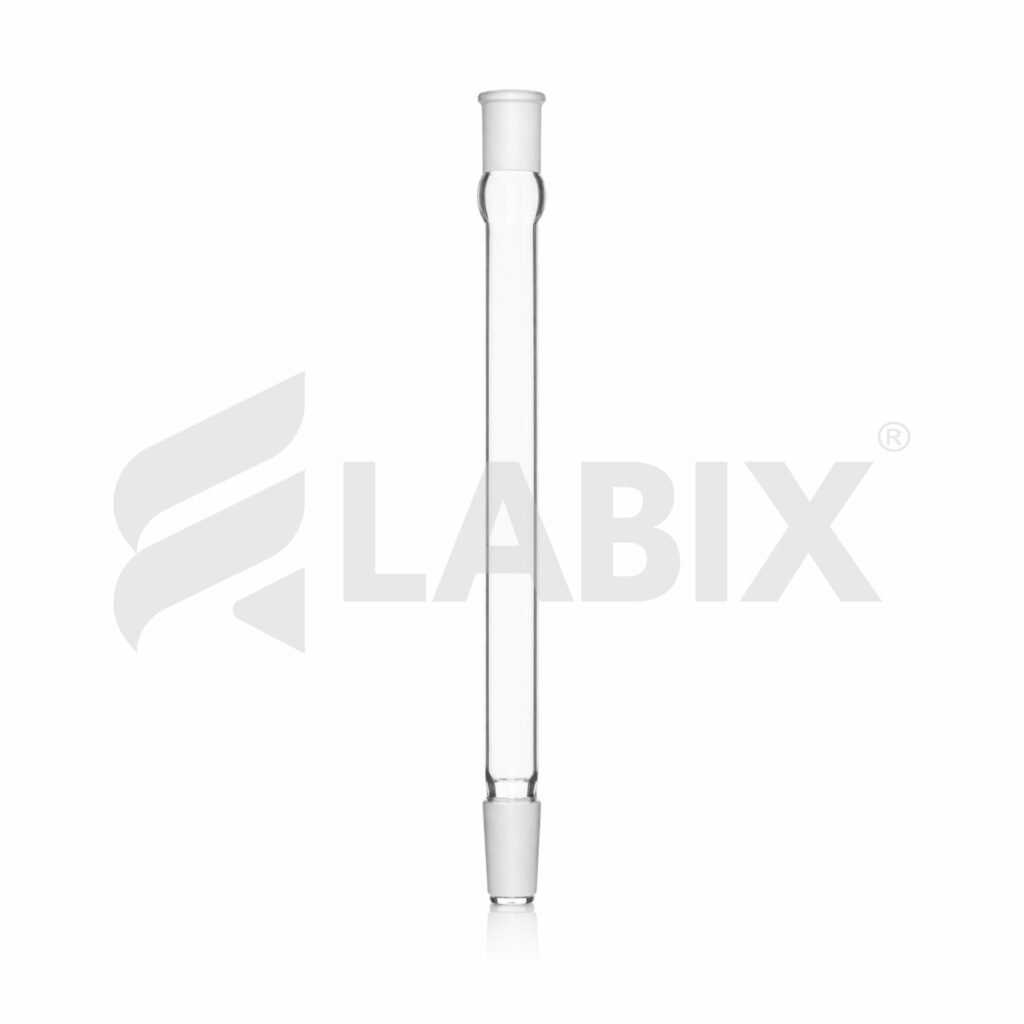
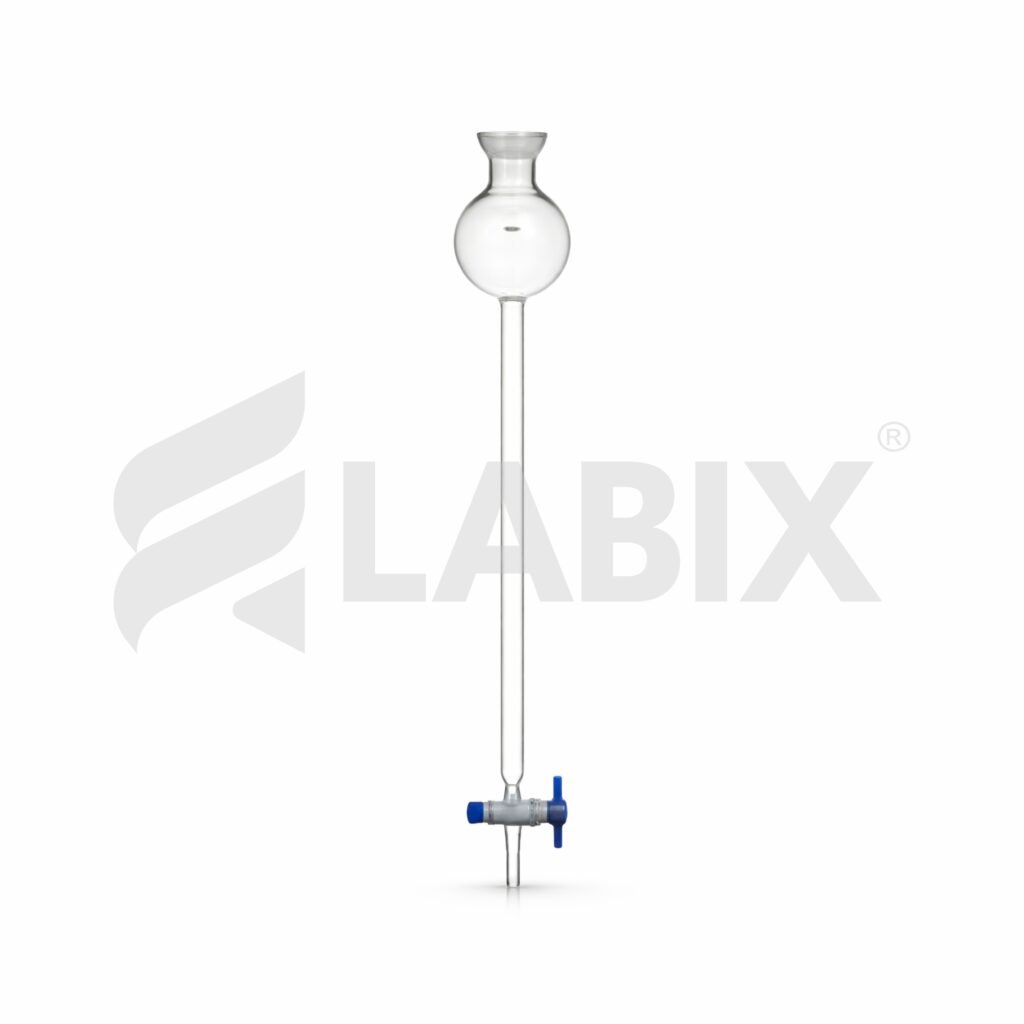
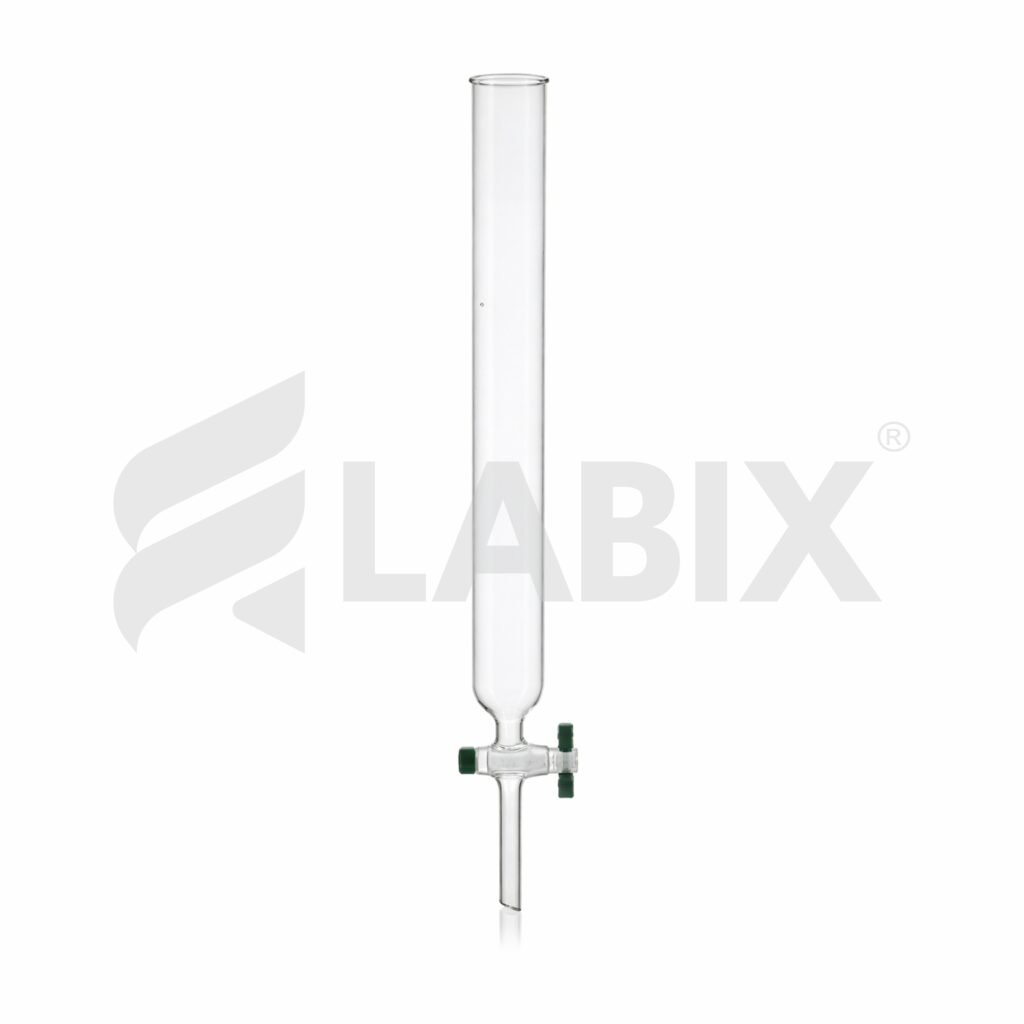
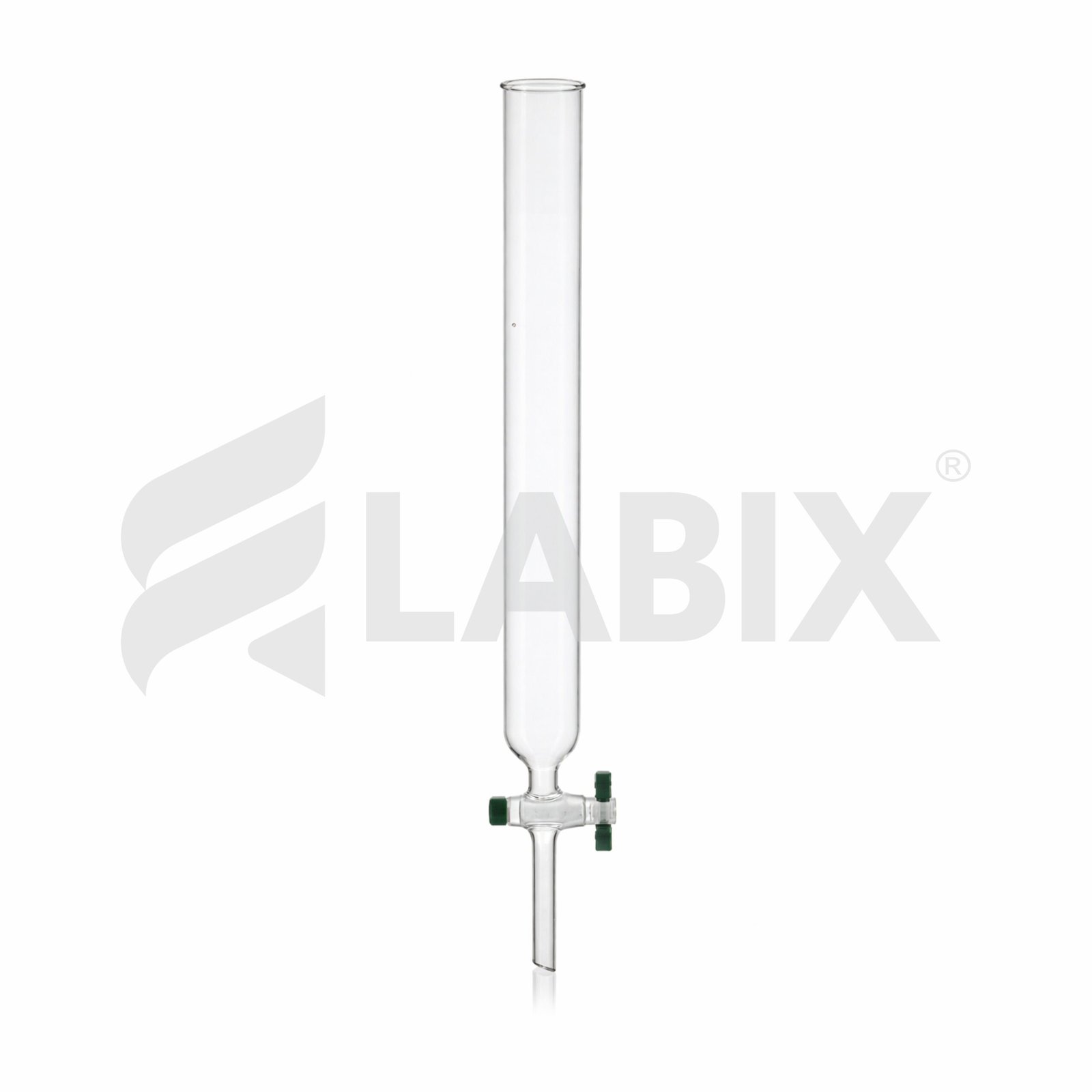
A chromatography column is a vital laboratory tool used for separating chemical compounds during analytical and research experiments. This chromatography column with integral sintered disc and PTFE stopcock provides precise flow control and efficient compound separation. Because chromatography techniques require accurate equipment, laboratories depend on reliable columns to maintain consistent experimental results.
Labix manufactures high-quality chromatography glassware designed for research laboratories, universities, and industrial testing facilities. Moreover, the company focuses on durable materials and precision engineering. As a result, scientists can perform chromatography experiments with improved reliability and efficiency.
Key Features of the Chromatography Column
Integrated Sintered Disc Support
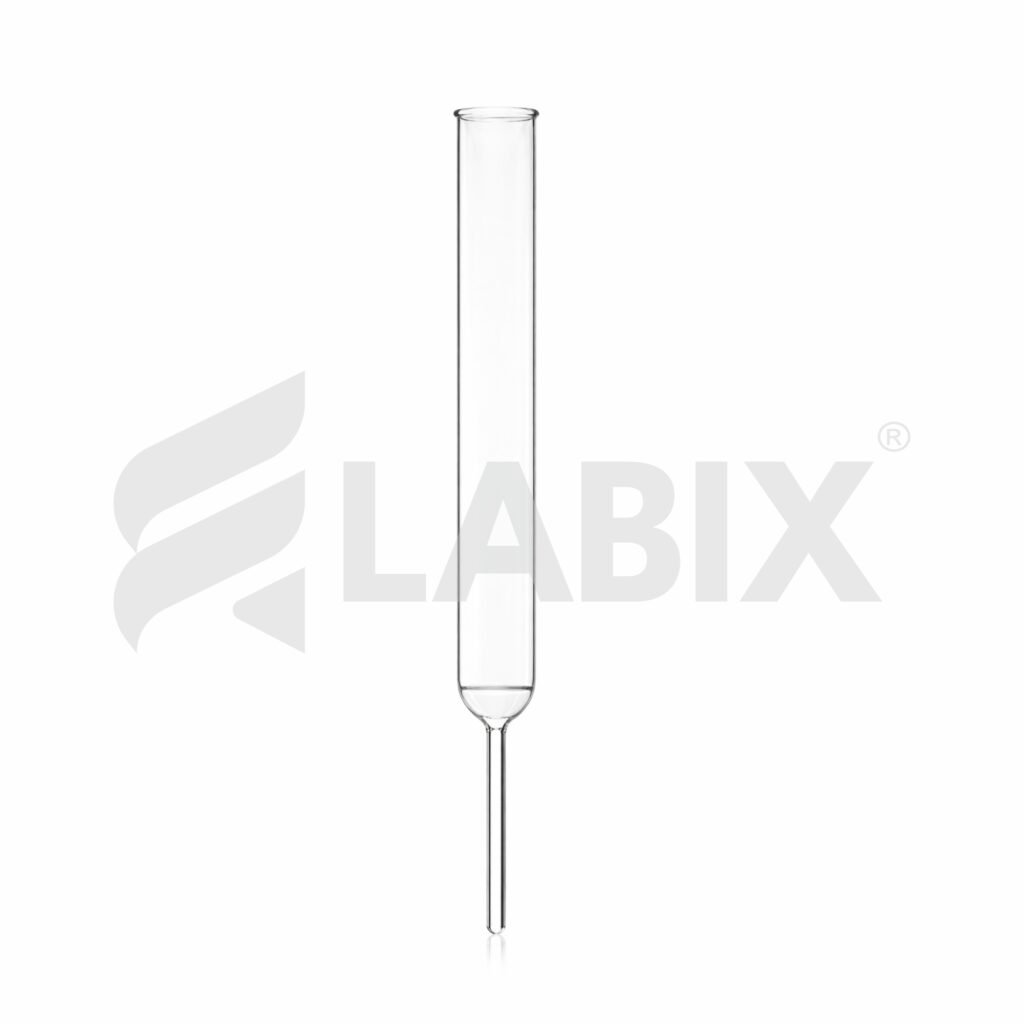
The integrated sintered disc in this chromatography column supports the stationary phase and ensures even solvent distribution. Consequently, researchers can achieve uniform separation of chemical components during chromatography experiments.
PTFE Stopcock for Precise Flow Control
The PTFE stopcock allows scientists to control solvent flow accurately. In addition, PTFE material provides excellent chemical resistance. Therefore, this chromatography column performs reliably in different chemical environments.
Durable Laboratory Glass
Labix manufactures each chromatography column using strong laboratory-grade glass. Because of this construction, the column resists chemical corrosion and maintains stability during repeated experiments.
Transparent Design for Observation
The clear glass body allows researchers to observe the separation process easily. As a result, scientists can monitor compound movement and maintain better control during chromatography procedures.
Applications of Chromatography Column in Laboratories
Chemical Research Laboratories
Chemical researchers frequently use a chromatography column to separate and purify chemical mixtures. For example, scientists analyze organic compounds and isolate reaction products during research experiments.
Pharmaceutical Laboratories
Pharmaceutical laboratories require precise separation techniques for drug development. Therefore, researchers use a chromatography column to isolate active ingredients and analyze sample purity.
Academic Laboratories
Universities and research institutions use chromatography equipment for teaching analytical chemistry techniques. Consequently, students learn practical laboratory separation methods using a chromatography column.
Industrial Testing
Industrial laboratories rely on chromatography methods for quality control testing. As a result, a chromatography column helps analyze chemical compositions and verify product quality.
Benefits of Using Labix Chromatography Column
Accurate Chemical Separation
The integrated disc design ensures uniform solvent distribution. Because of this feature, the chromatography column supports reliable compound separation.
Reliable Flow Regulation
The PTFE stopcock allows precise solvent control. Consequently, researchers can adjust flow rates easily during experiments.
Long-Lasting Laboratory Equipment
Labix chromatography column products are manufactured with durable glass materials. Therefore, laboratories can rely on them for long-term use.
Efficient Laboratory Workflow
A well-designed chromatography column improves laboratory productivity. As a result, scientists can complete separation processes more efficiently.
Why Choose Labix
Labix is known for manufacturing professional laboratory glassware used in scientific research and industrial testing. Every chromatography column undergoes strict quality checks to ensure consistent performance.
Moreover, Labix focuses on precision manufacturing and durable materials. Because of these standards, laboratories trust Labix chromatography column equipment for reliable analytical experiments.